Every new client shouldn’t create more manual work.
Reporting. Proposals. Campaign checks. Audits. Dashboards. Internal handoffs.
As your agency grows, these tasks multiply until your team runs out of capacity and another hire becomes the obvious answer.
Build the systems that change that equation.

Reporting production time reduced
Proposal production time reduced
Audit production time reduced
Specialist time saved across agency workflows
Systems that take repetitive work out of agency delivery.
Identify the work that multiplies every time your agency wins another client, then replace the repetitive parts with automation, monitoring, reporting and AI systems that reduce the effort required to deliver it.
Agency growth creates workload faster than it creates capacity.
Win another ten clients and you don’t just gain ten retainers.
You gain ten more reports. Ten more accounts to monitor. More proposals. More audits. More dashboards. More updates. More internal coordination.
Growth should increase revenue, not multiply manual work.
Collecting data, checking KPIs, preparing commentary and distributing reports.
Explore Reporting Automation →Problems remain invisible until somebody logs in and finds them.
Explore Campaign Monitoring →Agency knowledge is repeatedly assembled instead of reused.
Explore Proposal Automation →The agency gets bigger. The operational drag gets bigger with it.
Explore Workflow Automation →Find the work that’s draining your agency’s capacity.
Identify the repetitive tasks, manual checks and recurring admin that are consuming specialist time.
Eight systems to free up capacity and generate new opportunities.
Reduce repetitive work, improve visibility and turn your agency’s expertise into new enquiries. Each system addresses a specific part of how your agency operates or wins business.
Reporting Automation
Stop rebuilding client reports every month. Collect data, prepare commentary and distribute reporting automatically.
02Proposal Automation
Turn discovery information, agency services, methodology and approved content into consistent proposal drafts without starting again.
03Campaign Monitoring
Monitor spend, CPA, conversion volume, tracking and account performance continuously instead of relying on somebody to notice a problem.
04Workflow Automation
Connect tools, automate handoffs and remove the copy-paste-chase work sitting between teams and platforms.
05Audit Automation
Stop paying specialists to repeat the same audit framework manually. Automate data analysis and build structured first-pass findings faster.
06Custom Reporting Systems
Build live dashboards around the client’s real KPIs, platforms and commercial priorities rather than forcing everyone into the same template.
07Lead Generation & Qualification
Engage website visitors, understand their needs and qualify enquiries, giving your team the context to follow up.
08Instant Audit & Scorecard
Give prospects a branded assessment with personalised scores and next steps, while capturing new enquiries for your agency.
Built around the tools your agency already uses.
We connect the platforms already embedded in your agency and remove the manual work between them.


You don’t need all eight systems.
Start with the system that removes the biggest chunk of wasted effort and creates the most capacity.
Keep the people. Keep the knowledge. Remove the unnecessary work.
Your agency already has the important parts. Build the operating layer that makes them easier to use at scale.
Efficiency Engine
Automation, AI, monitoring, reporting and workflow systems built around agency delivery.
Built systems.
Real agency workflows.
Practical systems built around real agency workflows — with client identities and commercially sensitive information kept private.
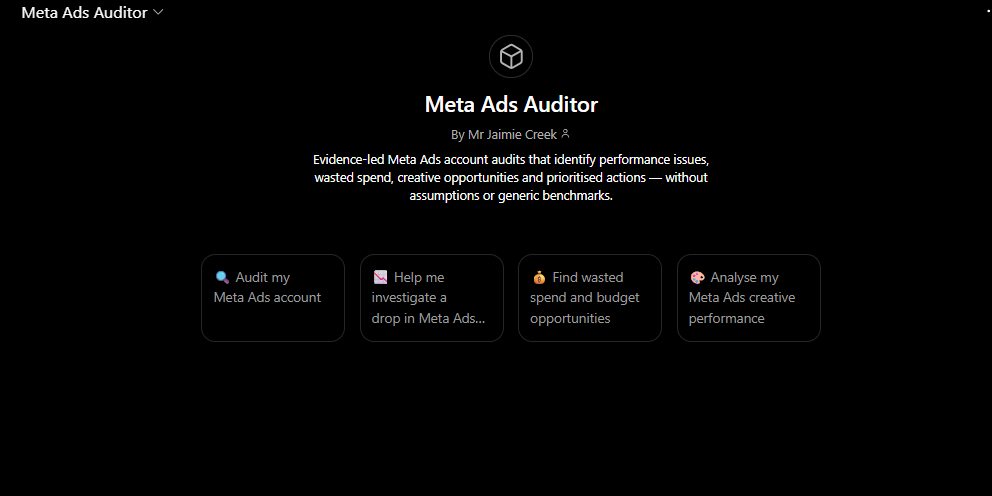
Agency knowledge turned into reusable delivery systems.
Custom assistants built around existing proposal content, audit methodologies, CRO frameworks and specialist review processes.
2.5 hours saved per proposal
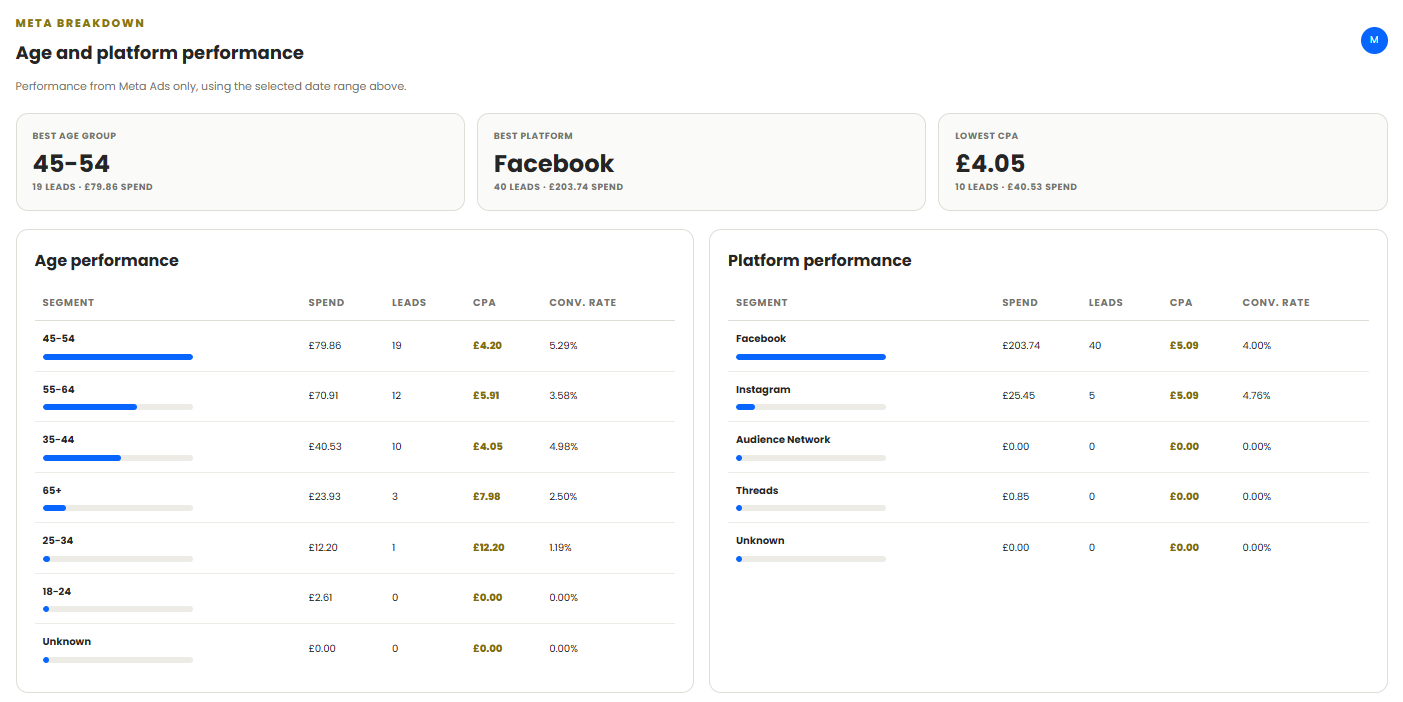
Reporting built around the client, not the template.
Dashboards and reporting workflows that bring together the data, context and outputs each client actually needs.
32 hours saved per reporting cycle
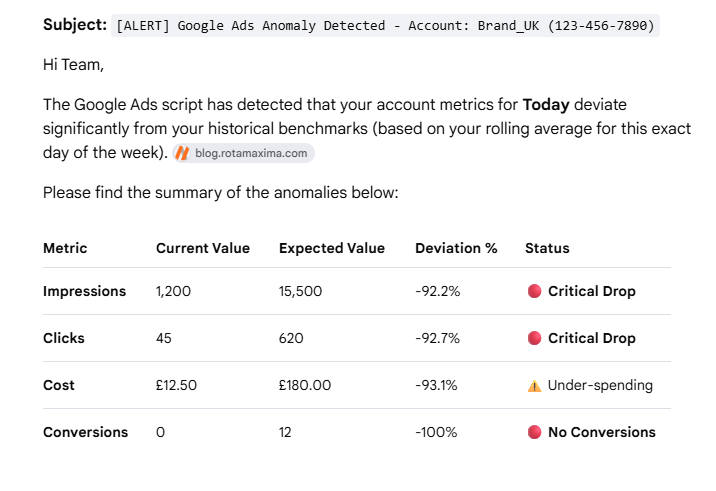
Issues surfaced before somebody has to go looking for them.
Google Ads scripts and alert systems monitoring overspend, CPA spikes, broken links, budget pacing and performance anomalies.
Around 2 hours saved every day
Examples are based on real agency implementations. Client names, account information and commercially sensitive workflows are intentionally anonymised.
Build more client capacity without increasing operational headcount.
Reduce the repetitive workload sitting behind every client and create more room for the work that actually needs your team.
More Client Capacity
Reduce the operational workload created by each new account.
Stronger Margins
Spend fewer delivery hours on work that doesn’t require specialist judgement.
Less Headcount Pressure
Give the existing team more room before another hire becomes unavoidable.
Earlier Problem Detection
Know when something changes instead of waiting for someone to find it.
Consistent Delivery
Put repeatable systems around work currently dependent on individual habits.
Better Use Of Specialists
Keep experienced people focused on judgement, strategy and client value.
Start with the work costing your agency the most.
Map the bottlenecks, repetitive tasks and manual checks consuming the most valuable time, then prioritise the systems with the strongest commercial return.
Map the workload
Find repetitive work, bottlenecks, checks and manual handoffs.
Find the biggest return
Rank systems by time saved, business impact and complexity.
Install the system
Build and test around the platforms and processes your agency already uses.
Put it into delivery
Train the team, document the process and make the system operational.
15+ years inside digital marketing shapes how these systems are built.
I’ve worked across paid media, analytics, reporting, conversion tracking, audits, client delivery and agency workflows — the same areas where repetitive work, manual checks and operational drag tend to build up.
That experience makes it easier to see which parts of delivery can be structured, automated or monitored, and which parts still need context, commercial understanding and specialist judgement.
The systems are built around the work your agency already does, the knowledge your team already has and the points where better infrastructure can remove unnecessary effort.

Jaimie Creek
Founder
Common questions about how Efficiency Engine works.
Clear answers to the questions agencies usually have before choosing what to automate, how implementation works and what support looks like afterwards.
Start with the work that takes up the most time or causes the biggest bottleneck. That could be reporting, checking accounts, building proposals, carrying out audits or another task your team repeats regularly. The Efficiency Review helps identify which area is likely to give you the biggest saving first.
No. It is usually better to fix one valuable workflow first. You can see how much time it saves, make sure it works well for the team and then decide what to automate next.
Usually, only a little. We first look at how your team already works and keep the parts that make sense. The aim is to remove repetitive steps, not make everyone learn a completely new way of doing their job.
In most cases, yes. We try to work with the tools your agency already uses rather than replacing them. That can include Google Ads, Meta, GA4, Sheets, dashboards, CRM systems, Slack, AI tools and other platforms already used by your team.
We make sure it works properly in the real workflow and show your team how to use it. After that, you can run it internally, keep Efficiency Engine involved for support, or move on to the next workflow you want to improve.
We agree the support you need before the project starts. If you want ongoing support, Efficiency Engine can help maintain and update the system. If you want to manage it yourself, we can provide the access and documentation you need to keep it running.
Where is your agency wasting the most valuable time?
Map how client work is delivered today, identify where valuable effort is being lost and see which system could create the biggest capacity gain.